Review: Painter Artist Cake Topper SVG for Embroidery
As a designer who has spent years digitizing files and testing them on everything from stiff canvas to slippery satin, I approach every new machine embroidery design with a healthy dose of skepticism. We have all been there: you download a file that looks stunning on the screen, only to find it turns into a puckered mess or a tangled bird’s nest once the needle hits the fabric. When I first loaded the Painter Artist Cake Topper SVG into my workflow, I wasn’t just looking at a graphic; I was evaluating its potential as a viable asset for my clients and my own small shop.
This isn’t just another clipart bundle. It is described as an innovative 3D SVG collection, ready for immediate download and compatible with major software like Silhouette Studio and Cricut Design Space. But for us in the embroidery world, the question is always: how does this translate to thread? Let’s break down how this design performs in real-world scenarios, specifically for those of us creating handmade products for Birthdays and other celebratory occasions.
First Impressions and Visual Personality
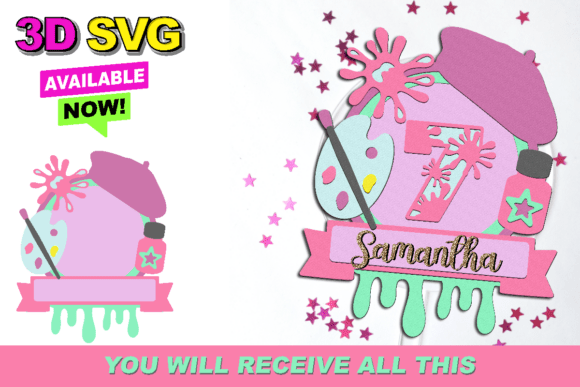
The immediate mood of the Painter Artist Cake Topper SVG is whimsical yet structured. The lines are clean, suggesting a modern aesthetic that appeals to contemporary buyers rather than traditionalists. For an embroidery project, this clarity is crucial. Complex, muddy lines often result in poor stitch definition, but here, the separation between elements suggests that the design can handle various stitch types without losing its identity.
I envision this design working beautifully as a central motif on a custom apparel piece. Imagine a high-quality cotton tote bag where the "cake" element serves as the focal point. The visual personality is friendly and inviting, which is exactly what customers look for in a personalized gift. It doesn’t scream for attention; it invites curiosity. This subtle confidence makes it ideal for boutique branding, where you want your finished product to look professional rather than cluttered.
Real-World Application: The Custom Sweatshirt Test
To truly test a design, you have to imagine it on a difficult surface. I recently worked on a order for a local bakery owner who wanted branded merchandise. She needed something that would look good on a heavy fleece sweatshirt. This is where the Painter Artist Cake Topper SVG shines if handled correctly.
Because the design has distinct shapes, it lends itself well to a combination of satin stitch borders and fill stitch interiors. On a textured fabric like fleece, a pure fill stitch can sometimes get lost in the pile. However, by using a bold satin stitch outline, you create a crisp edge that pops against the soft background. I would recommend using a cut-away stabilizer for this application to ensure the design remains stable after repeated washing, which is critical for commercial embroidery items that need to maintain their value over time.
For smaller items, such as a baby embroidery project on a onesie, scale becomes your best friend and your worst enemy. You must resize the design carefully. If you shrink it too much, the tiny details might merge, causing thread breaks or a messy appearance. Always test on scrap fabric first. I suggest running a test stitch-out on a similar weight fabric to check the stitch density. If the areas are too dense, you may need to adjust the settings in your software to prevent the fabric from puckering.
Navigating Fabric and Hoop Constraints
Not every fabric is created equal, and not every hoop size will accommodate this design comfortably. When working with stretchy fabrics like jersey knits for t-shirts, the stability of the Painter Artist Cake Topper SVG depends heavily on your hooping technique. A floating method with a strong tear-away or cut-away stabilizer is often safer than trying to hoop the garment directly, especially if the design is large.
Dark fabrics present another challenge. If you are stitching this on navy or black, your thread colors need to have high contrast. Pastels might disappear, so opt for vibrant, saturated thread colors to ensure the design reads clearly from a distance. This is vital for Etsy sellers who rely on photos for their listings. A blurry, low-contrast embroidered patch or towel design will not convert browsers into buyers.
Curved surfaces, like caps, require extra caution. The center of the cap is the only safe zone for a design of this nature. If the Painter Artist Cake Topper SVG has wide horizontal elements, they might distort around the curve of the crown. I recommend checking the width of the design against your cap frame’s maximum area before committing to the final stitch-out.
Commercial Viability and Brand Consistency
For craft business owners and digital product sellers, consistency is key. This design fits seamlessly into a broader collection of celebration-themed assets. Whether you are creating holiday embroidery for Christmas parties or personalized gifts for weddings, the versatile style of this SVG allows it to adapt. It feels at home on a kitchen towel just as much as it does on a decorative pillow cover.
From a buyer engagement perspective, this design offers high perceived value. It looks intricate enough to justify a higher price point for custom apparel but is simple enough to stitch out quickly, keeping your production costs low. This balance is the holy grail for small shop products. When customers see a clean, well-executed embroidered item, their trust in your brand increases. They perceive the product as high-quality, which leads to repeat business and positive reviews.
Practical Designer Notes
Before you launch this into your next big batch of orders, keep these practical tips in mind:
- Check Licensing: While the product description mentions compatibility with Silhouette and Cricut, always confirm the specific license terms for commercial use. Ensure you are allowed to sell finished physical items made with this design.
- Test Stitch Density: Use a test file to see how the software interprets the SVG paths. You may need to manually assign stitch types (running, satin, or fill) to optimize the look.
- Contrast Check: View your design in black and white mockups. If the details disappear in grayscale, they will likely get lost in low-light photos or on busy fabric patterns.
- Stabilizer Selection: Match your stabilizer to your fabric. Lightweight fabrics need lightweight stabilizers to avoid stiffness, while heavy fabrics need robust support to prevent distortion.
- Thread Quality: Use high-quality polyester or rayon threads. Cheap thread can break frequently, ruining the professional look of your handmade product.
In conclusion, the Painter Artist Cake Topper SVG is a strong contender for your design library. It offers the flexibility needed for various embroidery projects, from simple tote bag designs to complex custom apparel. By paying attention to fabric texture, hoop size, and stitch density, you can transform this digital asset into a stunning finished product that delights customers and strengthens your brand. Happy stitching!