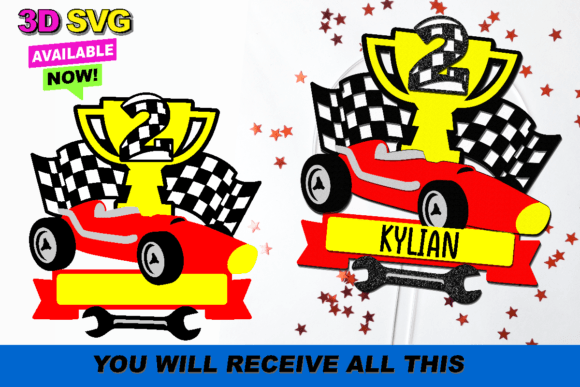
Reviewing the Race Car Cake Topper 3D SVG for Stitch
As a designer who spends half my life digitizing and the other half stitching, I approach every new file with a healthy dose of skepticism. We have all been there: downloading a digital embroidery file that looks crisp on the screen but turns into a tangled mess of thread breaks and puckering on the hoop. So, when I encountered the Race Car Cake Topper 3D SVG, my initial reaction was caution. The title suggests it is intended for paper crafts, specifically Cake Toppers and Laser Cutting projects using Silhouette Studio or Cricut Design Space. However, in the world of handmade goods, lines blur. I wanted to see if this vector-based graphic could translate into a viable machine embroidery design for my clients.
First Impressions and Visual Personality
The first thing you notice about this asset is its bold, graphic nature. It does not rely on subtle gradients or photorealistic shading. Instead, it uses strong outlines and distinct shapes to convey speed and motion. For an embroidery project, this is actually a blessing. Complex photographs often require thousands of stitches and high stitch density, which can make fabric stiff. This race car design, by contrast, feels open and airy. The mood it creates is energetic and playful, making it an immediate candidate for children’s items or spirited adult apparel.
When I imported the SVG into my digitizing software to convert it for stitching, the clean lines made the process straightforward. The lack of excessive detail meant I could focus on creating smooth satin stitch borders and efficient fill stitch areas without worrying about tiny, unmanageable elements. It felt like a design that respected the limitations of the needle and thread.
Real-World Application: The Custom Tote Bag Test
To test its viability, I decided to use it for a custom order: a personalized tote bag for a young boy’s birthday party. The client wanted something durable yet festive. I chose a heavy canvas fabric, which is ideal for handling the tension of embroidery. Because the original file is an SVG collection compatible with cutting hardware, I had to manually assign stitch types. I opted for a thick satin stitch for the car body to give it a raised, premium look, and a simple running stitch for the wheels to keep them flexible.
The result was surprisingly effective. The race car popped against the neutral canvas. Customers reacting to the finished product noted how clean the edges looked. There was no fraying, and the design held its shape perfectly after washing. This experience highlighted that while the product is marketed for laser cutting, its structural simplicity makes it an excellent foundation for embroidered patch creation or direct-to-garment stitching. It transforms a standard tote bag design into a memorable keepsake.
Versatility Across Product Lines
Beyond tote bags, I see significant potential for this design in various craft business niches. For Etsy sellers looking to expand their catalog, this graphic works well on:
- Sweatshirt embroidery: Placed on the left chest for a subtle, boutique feel.
- Baby embroidery: Perfect for onesies or bibs, provided the scale is reduced appropriately.
- Holiday embroidery: Great for themed gifts where speed and excitement are part of the narrative.
- Custom apparel: Ideal for team shirts or family reunion gear.
The key is adaptability. Because the design is vector-based, scaling it up or down does not lose quality before you even begin the digitizing process. This allows for consistent branding across different small shop product lines, from large pillow covers to tiny hair accessories.
Technical Considerations and Cautionary Notes
While the design is forgiving, it is not without its challenges. Embroidery designers must be mindful of where they place this graphic. On curved surfaces like caps, the wide body of the car might distort if the hoop is not stabilized correctly. Always use a sturdy stabilizer to prevent puckering, especially on stretchy fabrics like jersey knits used in t-shirts.
Additionally, consider the thread colors carefully. Since the design relies on bold shapes, poor color contrast can make the details disappear. For example, stitching a red car on a dark navy shirt requires a bright outline or a backing layer to ensure visibility. I recommend testing the design on scrap fabric first. Check how the fabric texture interacts with the stitches. Thin fabrics may require a tear-away stabilizer and lighter tension to avoid pulling.
Be cautious with tiny details if you plan to scale the design down significantly for baby items. What looks clear in a printable mockup might become a dense clump of thread at one inch wide. Always inspect small details and adjust your stitch length accordingly. If you are creating an applique design, ensure the cut edges are covered sufficiently by the satin border to prevent fraying over time.
Impact on Brand Value and Customer Trust
Using high-quality, well-executed designs directly impacts customer trust. A clean, professional finished product signals that you care about quality. When buyers receive a personalized gift that looks polished and durable, they are more likely to return. This race car design, when stitched with precision, enhances the perceived value of the item. It moves the product from a generic commodity to a thoughtful, custom creation.
For commercial embroidery projects, consistency is key. By mastering how this specific shape behaves under the needle, you can offer reliable turnaround times and predictable results. This reliability builds your reputation as a skilled maker, not just someone who owns a machine.
Practical Designer Notes
Before you rush to list this as a new item in your store, take these practical steps:
- Check Licensing: The product description mentions compatibility with Silhouette and Cricut. Verify if the creator allows commercial use of the derived embroidery files. Never assume; always confirm licensing before selling design assets or finished items.
- Test on Dark and Light Fabrics: See how the design reads on different backgrounds. You may need to add a white underlay for dark garments.
- Monitor Hoop Size: Ensure your machine’s hoop size can accommodate the scaled version you intend to produce.
- Review Stitch Density: Too much fill can make the fabric board-like. Keep it balanced for comfort, especially on wearable items.
In conclusion, the Race Car Cake Topper 3D SVG is more than just a paper craft asset. With careful digitizing and attention to textile mechanics, it becomes a versatile tool for any embroidery professional. It offers a blend of fun aesthetics and technical manageability that fits well into the modern handmade product market. Whether you are creating a unique holiday gift or stocking your online boutique, this design deserves a spot in your creative toolkit, provided you respect the medium of thread and fabric.